Global B2B Plant Protein Industry Landscape: Market Dynamics & Strategic Insights
The global shift toward sustainable, functional, and plant-based foods has elevated clean-label plant protein from a niche dietary option to a foundational ingredient in industrial food formulation. B2B purchasers, food scientists, and developers are facing strict requirements regarding transparency, allergen control, non-GMO verification, and clean-label declarations. Standard commodities no longer suffice; instead, modern processing demands target-specific physical and chemical attributes such as gelling capacity, water-binding metrics, dispersion properties, and thermal stability.
Within this dynamic marketplace, the demand for Non-GMO Isolated Soy Protein, Vital Wheat Gluten, and functional fibers has grown rapidly. These ingredients serve as structural bases for clean-label meat analogues, high-protein plant beverages, restructured meat systems, and functional bakery products. Achieving high quality at this scale requires deep vertical integration—from secure, documented agricultural cultivation to state-of-the-art separation and drying technologies.
500,000T
Annual Wheat Flour Processing Capacity
180,000T
Annual Non-GMO Soybean Processing
50,000T
Isolated Soy Protein Output/Year
30,000T
Vital Wheat Gluten Output/Year
Enterprise Footprint: A Circular B2B Production Model
Established in May 2003, Xinrui Group has developed a circular economy industrial chain spanning over 1,000 mu. By integrating raw material sourcing, co-generation of thermal energy, clean water cycles, and advanced deep extraction, we minimize waste while maintaining consistent production conditions.
Our operations are structured around three specialized core entities:
-
Guanxian Xinrui Industrial Co., Ltd. (formerly Guanxian Ruixiang Biotechnology Development Co., Ltd.): Established in 2007 with a registered capital of 100 million Yuan. This facility processes 500,000 tons of wheat flour annually, extracting high-grade vital wheat gluten along with A and B wheat starches. Starch B and secondary pentosans are directed into clean ethanol and specialized animal feed, completing the zero-waste raw material cycle.
-
Shandong Kawah Oils Co., Ltd.: Founded in 2014 with a registered capital of 120 million Yuan, this agricultural industrialization enterprise handles the processing of 180,000 tons of domestic Non-GMO soybeans annually. It refines Non-GMO soybean oil, low-temperature food-grade soy meal, isolated soy protein (ISP), and soy dietary fiber (SDF) in a continuous, chemical-solvent-minimized extraction process.
-
Guanxian Ruichang Trading Co., Ltd.: Set up in 2011 with a registered capital of 6 million Yuan, this branch manages global logistics, international customs compliance, and supply chain fulfillment, exporting over 70% of the group's manufactured proteins directly to buyers overseas.
Technological Roadmap: Advanced Extraction and Spray Drying
Consistent functional performance in plant proteins depends on preserving the native structure of the molecules during extraction. Thermal damage or harsh chemical isolation can denature proteins, reducing solubility, emulsification, and water absorption.
Three-Decanter (Tri-canter) Separation Technology
Implemented in our wheat processing lines, this closed-loop German technology separates wheat starch and gluten proteins cleanly. It avoids structural shear damage and yields vital wheat gluten with exceptional viscoelastic properties and high water absorption.
Low-Temperature Desolventizing & Extraction
For soy proteins, Shandong Kawah Oils uses a low-temperature extraction system on raw Non-GMO soybeans. This process ensures the starting soy flakes retain high soluble nitrogen indexes, which are essential for producing highly functional, soluble isolates.
Dachuanyuan Spray Drying System
Operating one of the largest single-line spray drying towers in China, our facilities run a computer-controlled thermal profile. This process converts wet soy protein curd into fine, dispersible powders while minimizing thermal denaturation.
Functional Breakdown of Protein Isolates & Concentrates
Different food products require specific protein functionalities. We manufacture a range of targeted grades designed to meet these distinct formulation needs:
Meat & Emulsion Types (9007B-A, 9007B-C, 9500)
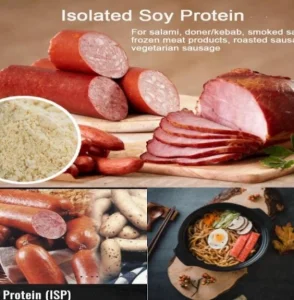
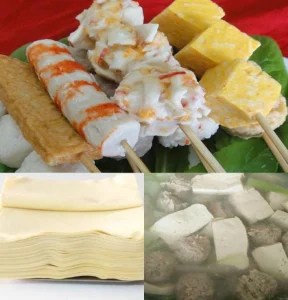
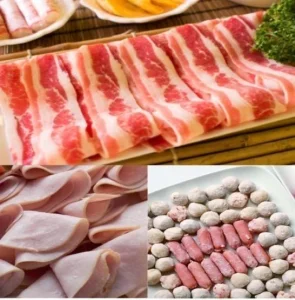
Formulated to create stable protein-water-fat emulsions that hold together during heating and sterilization. Ideal for frankfurters, bologna, surimi, and high-yield cooked sausages.
Beverage & Dispersion Types (9030, 9032)
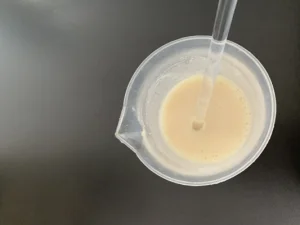
Engineered for low viscosity and rapid hydration. These grades disperse cleanly in liquid formulations without chalkiness, making them suitable for protein beverages, dairy alternatives, and nutritional shakes.
Vegetarian & Tofu Types (9005B, 9003B, 9003BA)
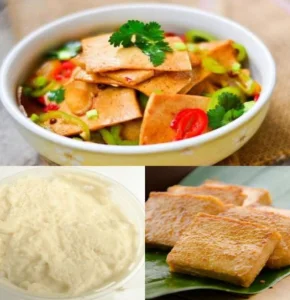
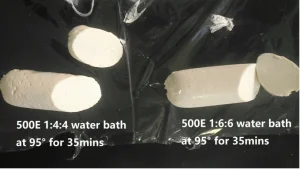
Designed to form firm, elastic gel matrices under heat. Used to optimize sliceability and structure in tofu, vegetarian cold cuts, and plant-based meat analogues.
Additionally, our Meat & Injection Types (9020, 9026, 9028) feature low-viscosity flow profiles under pressure, allowing them to penetrate whole muscle cuts cleanly without clogging needles. This improves moisture retention and slice yields in cured meats.
Macro Solutions for Industrial Applications
Our ingredients are designed to solve structural and nutritional challenges across a variety of food applications:
-
Restructured Meat Systems: Soy protein isolates bind water and fat to improve yield and texture, preventing shrinkage during cooking.
-
Bakery & Dough Optimization: Our Vital Wheat Gluten (VWG-P and VWG-PS) reinforces weak flour matrices, improves dough gas retention, and extends the shelf life of breads, buns, and high-fiber baked goods.
-
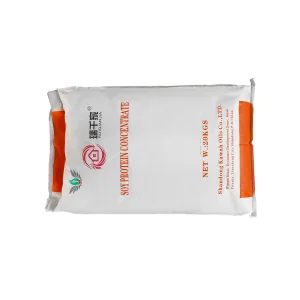
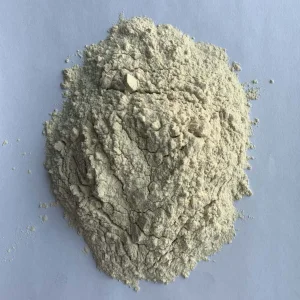
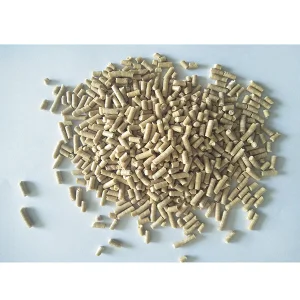
Plant-Based Meat Analogues: Combining high-gelling isolated soy proteins with functional soy protein concentrates creates a fibrous, chewable texture that mimics animal muscle tissue.
-
High-Fiber Formulation: Soy Dietary Fiber (SDF) increases total dietary fiber in bakery products, nutritional bars, and snacks while supporting clean-label binding without changing taste or texture profiles.
 Xinrui Group