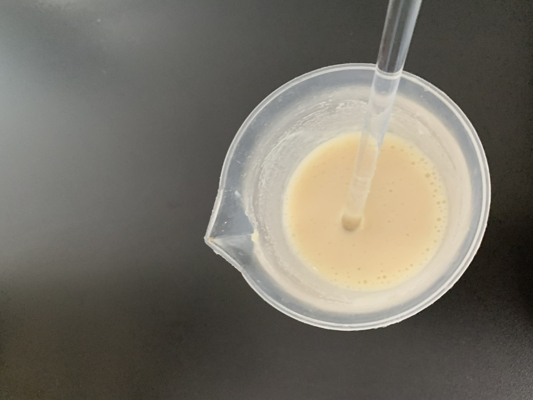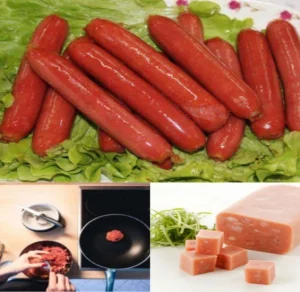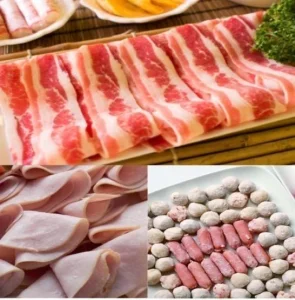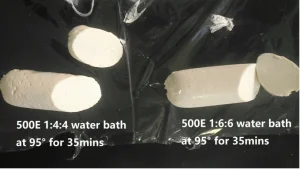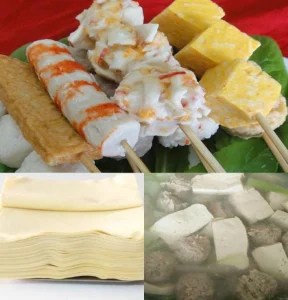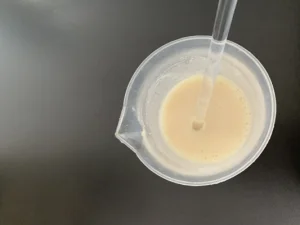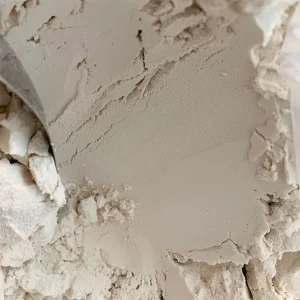
Our injectable and dispersive SPI 9020 and 9026 can dissolve in cold water in 30 seconds, without sediments after standing for 30 minutes. The viscosity of mixed liquid is from low to high, so it is easy to be injected into meat blocks. After injected, soy protein isolate can be combined with raw meat to improve the water retention, tenacity and brittle of taste and increase the product yield. It is dispersible and absorbed in meat through tumbling and massaging meat chunk. It performs very good function in poultry meat due to no yellowish tripe on crosscut, which occupies the dominated position in Chinese market of low temperature processing meat products.
Our new type of ISP – 9028 can be dispersed in brine in 15 seconds for injection into hams, duck, chicken and other similar cured products. It provides a number of benefits in products that result in enhanced finished-product quality and cost optimization. It disperses in brine solutions and will not clog injection equipment when properly hydrated, suitable for fine needle injection.
Application
Chicken thigh
Ham
Bacon
Meat Paddies
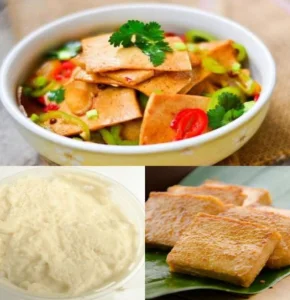
Soy yoghurt etc.
Characteristics
High injection yields without protein agglomeration.
Product Analysis
Analysis Item
Specification / Limit
Appearance
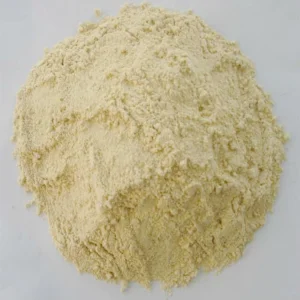
Light yellow
Protein (dry basis, Nx6.25, %)
≥90.0%
Moisture (%)
≤7.0%
Ash (dry basis, %)
≤6.0
Fat (%)
≤1.0
PH Value
7.5±1.0
Particle Size (100 mesh, %)
≥98
Total plate count
≤10000cfu/g
E.coli
Negative
Salmonella
Negative
Staphylococcus
Negative
Recommended Application Method
1. Dissolve 9020/9026/9028 in cold water or mix with other ingredients to make 5%-6% of solution, inject it into products.
Packing & Transportation
The outer is paper-polymer bag, the inner is food grade polythene plastic bag. Net weight: 20kg /bag;
Without pallet---12MT/20’GP, 25MT/40’ HC;
With pallet---10MT/20’GP, 20MT/40’GP.
Storage & Shelf-life
Storage: Store in dry and cool condition, keep away from material with odor or of volatilization. Shelf-life: Best within 24 months from production date.
Frequently Asked Questions (FAQ)
Q1: What are the main differences between SPI 9020/9026 and ISP-9028?
A1: SPI 9020 and 9026 are designed to dissolve in cold water within 30 seconds with no sediments after standing for 30 minutes, producing low to high viscosity mixtures suitable for regular injection. ISP-9028 is a newer type that disperses in brine in 15 seconds, making it ideal for fine needle injection equipment without causing clogging.
Q2: How does Soy Protein Isolate improve the quality of processed meats?
A2: When injected and combined with raw meat, Soy Protein Isolate improves water retention, tenacity, and bite texture (brittleness). It also helps to increase the overall product yield during low-temperature processing.
Q3: What is the recommended method for preparing the injection solution?
A3: It is recommended to dissolve SPI 9020, 9026, or 9028 in cold water or mix it with other ingredients to formulate a 5% to 6% solution before injecting it into the meat products.
Q4: What are the key chemical and physical specifications of these products?
A4: The products have a light yellow appearance, dry basis protein levels of ≥90.0%, moisture levels of ≤7.0%, fat levels of ≤1.0%, and a pH range of 7.5±1.0. The particle size is ≥98% passing through a 100 mesh screen.
Q5: How should the Soy Protein Isolate be packaged and stored?
A5: The product is packed in 20kg bags with a paper-polymer outer bag and a food-grade polythene inner bag. It must be stored in cool, dry conditions away from any volatile materials or strong odors to preserve quality.
Q6: What is the shelf-life and shipping capacity of this product?
A6: The shelf-life is best within 24 months from the production date. In terms of transportation, loading capacities are 12MT (20’GP) and 25MT (40’HC) without pallets, or 10MT (20’GP) and 20MT (40’GP) with pallets.