China Top 10 Dispersive Soy Protein Suppliers

Time:2026-10-14 Author:Charlotte
0%

China has become a significant sourcing base for plant-based protein ingredients. This guide introduces ten Chinese suppliers associated with Dispersive Soy Protein. It focuses on practical purchasing evidence, not promotional claims.

The review considers product consistency, dispersibility, protein content, and application performance. A useful sample should disperse evenly in water, without excessive clumping or sediment. Small details matter. Buyers should examine certificates of analysis, allergen controls, traceability records, and production capacity. Factory experience in beverages, nutrition powders, meat alternatives, or bakery applications can also indicate technical strength.

Commercial terms deserve equal attention. Minimum order quantities, packaging options, lead times, export experience, and technical support may affect the final decision. Suppliers with recognized food safety systems and transparent testing procedures generally offer greater confidence. However, certifications should be verified directly, because documents and production conditions can change.

No ranking is perfect. Supplier information may vary between product grades, facilities, and contract terms. A company may perform well for one formulation but poorly for another. Buyers should request current samples and compare them under real processing conditions. Test viscosity, hydration speed, flavor, color, and storage stability before approving a larger order. This approach combines market research with hands-on evaluation. It also leaves room for honest review when a supplier’s advertised strengths do not match laboratory or factory results.
China Top 10 Dispersive Soy Protein Suppliers

What Is Dispersible Soy Protein and Why Is It Used?

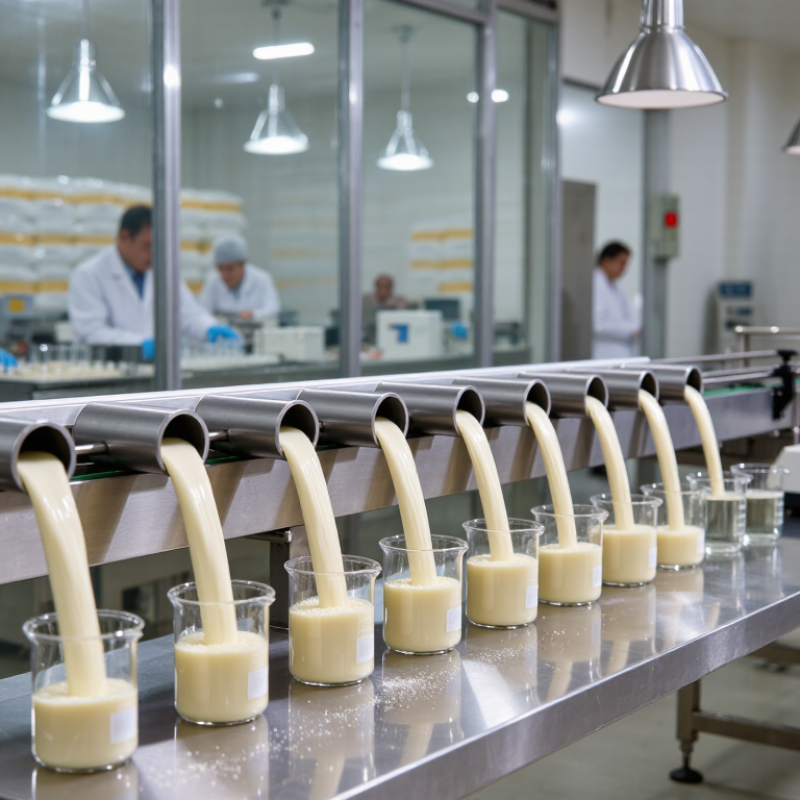
Dispersible soy protein is a powdered soy ingredient designed to mix quickly with water or other liquids. It is usually produced through controlled drying, particle adjustment, and sometimes surface treatment. The result is better wetting, fewer floating lumps, and more even protein distribution.

Dispersibility is not complete solubility. Some particles may remain visible, especially in cold water. This matters in nutrition drinks, bakery mixes, instant beverages, and plant-based foods. A well-dispersing powder can improve texture and shorten production time. In bench trials, I check wetting time, sediment after several minutes, viscosity, and flavor. Protein content alone is not enough. A high number can still hide poor mixing performance.

Tips: Test the powder in your real formula. Water temperature changes results. Ask suppliers for batch records, allergen statements, microbiological data, and storage guidance. Also check packaging carefully, because moisture can damage dispersibility. A small pilot test is safer than trusting a specification sheet. Sometimes, the “best” powder performs poorly in a different recipe.

Key Criteria for Evaluating Chinese Soy Protein Suppliers

China Top 10 Dispersive Soy Protein Suppliers

Key Criteria for Evaluating Chinese Soy Protein Suppliers

Choosing a dispersive soy protein supplier requires more than comparing quoted prices. Review the protein content, solubility, dispersibility, particle size, and moisture level. These figures affect mixing speed, mouthfeel, and stability in beverages or powdered foods. Ask for recent certificates of analysis, not only standard specification sheets. A reliable supplier should explain testing methods and provide batch numbers for traceability.

Food safety evidence matters. Check allergen controls, microbial results, heavy metal limits, and the supplier’s quality management system. Confirm whether production follows the requirements of your target market. Factory audits can reveal practical details, such as sealed raw-material storage, cleaning records, and humidity control. Documentation is useful, but physical verification is stronger.

Request samples from different production batches. Test them under real conditions, using your own water temperature, mixer, and processing time. A powder that disperses well in a laboratory may form lumps on a busy production line. Discuss minimum order quantities, lead times, packaging protection, and technical support before signing an agreement. No checklist is perfect. I would also examine complaint handling, because mistakes happen, and the response often shows more than a sales presentation. Supplier capacity should be verified carefully; impressive machinery does not always mean consistent output.

China Top 10 Dispersive Soy Protein Suppliers - Key Criteria for Evaluating Chinese Soy Protein Suppliers

No. Evaluation Dimension Recommended Commercial Benchmark Verification Documents or Tests Why It Matters for Dispersive Soy Protein Suggested Weight
1 Protein Content Confirm the guaranteed protein level on a dry basis according to the product grade. Commercial soy protein isolates commonly target approximately 90% protein or higher on a dry basis, while concentrates generally have lower protein levels. Batch certificate of analysis, third-party laboratory report, and method reference such as Kjeldahl or Dumas nitrogen analysis. Protein concentration affects nutritional value, formulation cost, viscosity, and finished-product labeling. 15%
2 Dispersibility and Solubility Require a defined in-house test method and acceptance limit for dispersibility, wettability, sedimentation, and solubility under the intended use conditions. Product specification, laboratory test results, application trial, and retained-sample comparison. Fast and stable dispersion helps prevent floating powder, lumps, sediment, and inconsistent dosing in beverages and liquid foods. 15%
3 Microbiological Safety The finished ingredient should comply with the microbiological limits applicable to its intended food category and destination market, including requirements for pathogens such as Salmonella. Recent batch microbiology reports, environmental monitoring records, pathogen-control procedures, and applicable Chinese or importing-country standards. Powdered ingredients can be exposed to contamination risks during processing, drying, packing, and storage. 15%
4 Moisture and Water Activity Use a moisture specification appropriate for the product grade and packaging system; verify water activity where shelf-life or microbial stability is critical. Batch moisture results, water-activity data where applicable, drying-process records, and shelf-life studies. Excess moisture may cause caking, poor flowability, reduced shelf life, and inconsistent dispersion. 8%
5 Heavy Metals and Contaminants Verify compliance with the maximum limits for contaminants required by the destination market, including lead, cadmium, pesticide residues, and other relevant contaminants. Accredited laboratory reports, raw-material risk assessment, supplier approval records, and periodic contaminant-monitoring plan. Soybeans can absorb environmental contaminants from soil, water, and agricultural inputs. 10%
6 Food Safety Management System Prefer a documented HACCP-based system and a valid certification such as ISO 22000 or FSSC 22000, subject to scope verification. Current certificate, certification scope, audit status, corrective-action records, and latest audit summary. A certified system demonstrates structured control of biological, chemical, and physical hazards. 10%
7 Raw-Material Traceability The supplier should be able to trace each finished batch to soybean origin, receiving records, processing records, packaging materials, and shipment details. Traceability procedure, mock recall results, lot-coding system, and raw-material supplier approval records. Traceability supports rapid investigation, targeted recall, and regulatory compliance. 8%
8 Non-GMO and Allergen Documentation Provide a clear declaration of GMO status, allergen handling, cross-contact controls, and labeling information required by the importing market. Non-GMO declaration or certification where required, allergen statement, identity-preservation records, and segregation procedures. Soy is a regulated major allergen in many markets, and GMO requirements differ by country and product category. 7%
9 Packaging and Shelf Life Packaging should protect the powder from moisture, oxygen, light, odor, and physical damage. Shelf life must be supported by stability data under stated storage conditions. Packaging specification, material compliance statement, shelf-life study, storage instructions, and transport test records. Correct packaging helps preserve flowability, flavor, color, microbiological quality, and dispersibility. 5%
10 Supply Reliability and Technical Support Evaluate documented production capacity, lead time, minimum order quantity, export experience, complaint response, sample availability, and application-support capability. Production plan, capacity statement, delivery records, customer-service procedure, technical data sheet, and sample-trial report. Reliable supply and technical assistance reduce formulation delays, production interruptions, and quality disputes. 7%
Total Evaluation Weight 100%

Note: Commercial specifications vary by product grade and application. Final approval should be based on the supplier’s current specification, batch certificate of analysis, applicable Chinese requirements, and the regulations of the importing market.

China’s Top 10 Dispersible Soy Protein Suppliers

China’s top 10 dispersible soy protein suppliers are often assessed by more than production volume. In practical sourcing, dispersibility is the key concern. A suitable powder should wet quickly, form fewer lumps, and remain stable in beverages or nutrition mixes. Particle size, lecithin content, protein purity, and processing conditions can all affect performance.

The strongest suppliers usually provide soy protein isolate or concentrate with clear technical data. Buyers should request a certificate of analysis, allergen statement, microbiological results, and traceability records.

Small trials are essential. Test the powder in cold water, plant-based milk, or a high-protein shake. Record mixing time, sediment, foam, taste, and viscosity. A product that disperses well at the factory may behave differently in your formula.

A top-ten ranking is never absolute. Supplier capability can change with harvest quality, equipment maintenance, and export experience. I would not trust a polished brochure alone. Ask for recent batch samples and production details.

Check whether the supplier can control odor, color, and moisture consistently. It also helps to review packaging strength, storage guidance, lead time, and response speed.

Some suppliers communicate clearly but offer limited customization. Others provide flexible specifications yet need stronger documentation. That trade-off deserves careful review. Mistakes happen. The better procurement decision comes from repeated testing, transparent records, and realistic expectations rather than the lowest quotation.

Product Types, Quality Standards, and Manufacturing Capabilities

China Top 10 Dispersive Soy Protein Suppliers: Product Types, Quality Standards, and Manufacturing Capabilities

China’s top ten dispersive soy protein suppliers generally offer isolates, concentrates, hydrolyzed powders, and instantized grades. Product choice depends on the application. Isolates may suit high-protein beverages, while concentrates work well in nutrition bars and meat alternatives. Instantized powder should disperse quickly in cold water, with limited sediment after several minutes. This detail matters in actual production.

The USDA’s Oilseeds: World Markets and Trade report estimated global soybean production at about 422 million metric tons for 2024/25. That scale supports broad raw-material availability, but volume alone does not prove quality. Reliable suppliers should document soybean origin, allergen controls, microbiological testing, and batch traceability. Certificates aligned with ISO 22000, FSSC 22000, HACCP, and applicable Codex guidance provide stronger evidence. Still, certificates require verification. Paperwork can look better than factory practice.

Manufacturing capability should include controlled milling, agglomeration, spray drying, and moisture management. Buyers should request dispersion time, protein content, particle size, water absorption, and viscosity data from recent batches. A practical trial can reveal problems that a specification sheet misses. For example, foam may increase after high-shear mixing, or sediment may appear after ten minutes. The Institute of Food Technologists highlights hydration, particle structure, and processing conditions as major factors in plant-protein performance. Suppliers with pilot equipment, laboratory support, and stable batch records are easier to evaluate. Yet even strong factories may show seasonal variation in raw soybeans, so repeated testing remains necessary.

How to Select the Right Supplier for Your Application

Choosing among China’s top dispersive soy protein suppliers requires more than comparing price per kilogram. USDA’s Oilseeds: World Markets and Trade report projects global soybean production near 426 million metric tons for 2024/25. That scale supports supply continuity, but it does not guarantee consistent protein performance. Ask for recent certificates of analysis, origin records, allergen controls, and batch-retention policies. A reliable supplier should explain how lecithination, particle size, and drying conditions affect dispersion.

Test samples in your actual formula. Stir the powder into water at the intended temperature. Measure wetting time, sediment after 30 minutes, viscosity, flavor, and foam. For beverage applications, check performance after pasteurization and storage. For bakery or nutrition products, review protein content, solubility, microbial limits, and amino acid data. ISO 22000 or FSSC 22000 certification can support food-safety confidence, but certification alone is not enough. Site audits still matter.

MarketsandMarkets has reported continuing growth in the global soy protein market, driven by nutrition and functional-food demand. This growth can encourage faster capacity expansion. That is worth questioning. Request three consecutive batch results, not one impressive sample. Compare pilot-scale behavior with laboratory results. Confirm minimum order quantities, lead times, packaging protection, and change-notification procedures. The cheapest supplier may become expensive after reformulation, delayed delivery, or unstable dispersion. A small trial often reveals more than a polished presentation.

FAQS

What makes a soy protein powder highly dispersible?

It should wet quickly, form fewer lumps, and remain stable in beverages. Particle size, lecithin content, purity, and drying conditions affect performance. Small trials matter.

Which documents should buyers request from suppliers?

Request recent certificates of analysis, allergen statements, microbiological results, and traceability records. Also ask about origin records and batch-retention procedures. Clear records reduce uncertainty.

How should soy protein samples be tested?

Test the powder in your actual formula and intended water temperature. Measure wetting time, sediment after 30 minutes, foam, viscosity, flavor, and mixing behavior. Laboratory results may not predict factory performance.

Should testing include cold beverages?

Yes, test cold water, plant-based milk, or high-protein shakes. Cold liquids can reveal slow wetting and stubborn lumps. Watch the bottom of the container.

What should beverage manufacturers check after processing?

Check dispersion after pasteurization and during storage. Record sediment, viscosity, flavor changes, and foam development. A powder may disperse well initially, then separate later.

Is certification enough when selecting a supplier?

No, certification supports confidence but does not prove consistent product performance. Review recent batches and consider a site audit. Documents are helpful, not magical.

How many batch results should buyers compare?

Compare results from at least three consecutive batches. Review protein content, moisture, microbial limits, solubility, and appearance. One attractive sample proves very little.

What commercial details should be confirmed before ordering?

Confirm minimum order quantities, lead times, packaging strength, storage guidance, and change-notification procedures. Ask how the supplier handles harvest variation and equipment maintenance. Small details become expensive later.

Is the lowest quotation usually the best choice?

Not necessarily. A lower price may lead to reformulation, delays, or unstable dispersion. Compare total risk, not only the kilogram price. I would question every unusually cheap offer.

Conclusion

This article provides a practical overview of China’s Dispersive Soy Protein supply market, explaining what it is, how it performs in food and beverage formulations, and why manufacturers value its rapid hydration, smooth dispersion, nutritional profile, and functional versatility. It also introduces the key factors used to evaluate suppliers, including raw material sourcing, protein content, processing technology, consistency, quality control, production capacity, certifications, customization services, and delivery reliability.

The guide presents a structured comparison of China’s top 10 Dispersive Soy Protein suppliers without focusing on brand promotion. It reviews common product types, applicable quality standards, manufacturing capabilities, packaging options, and technical support. Finally, it offers practical advice for selecting the right supplier according to application requirements, desired texture, solubility, nutritional targets, order volume, budget, and long-term cooperation potential. This approach helps buyers make informed decisions and identify suppliers capable of providing stable, safe, and application-focused soy protein solutions.

Charlotte

Charlotte

Charlotte is a seasoned marketing professional with a deep understanding of the company's portfolio and a passion for elevating its presence in the market. With a keen eye for detail and a commitment to excellence, she ensures that our professional blog is regularly updated with insightful articles......